Helpful Ways Modern Teams Deliver High Quality Data With Speed
Introduction
Every growing business depends on fresh, accurate information to make smart choices. Companies collect numbers from sales apps, customer forms, and website visits every single day. However, moving this information from one computer system to another is often very hard. Many teams struggle with slow pipelines, broken files, and silent system failures that take days to discover.
When workers must fix files by hand, reports arrive late and trust disappears. Teams begin arguing about which numbers are correct. This is why many organizations now turn to modern operational methods to fix their pipelines. Structured learning platforms like TheDataOps.org help technical teams learn how to make their workflows smooth, reliable, and completely automated.
Main Topic Explanation
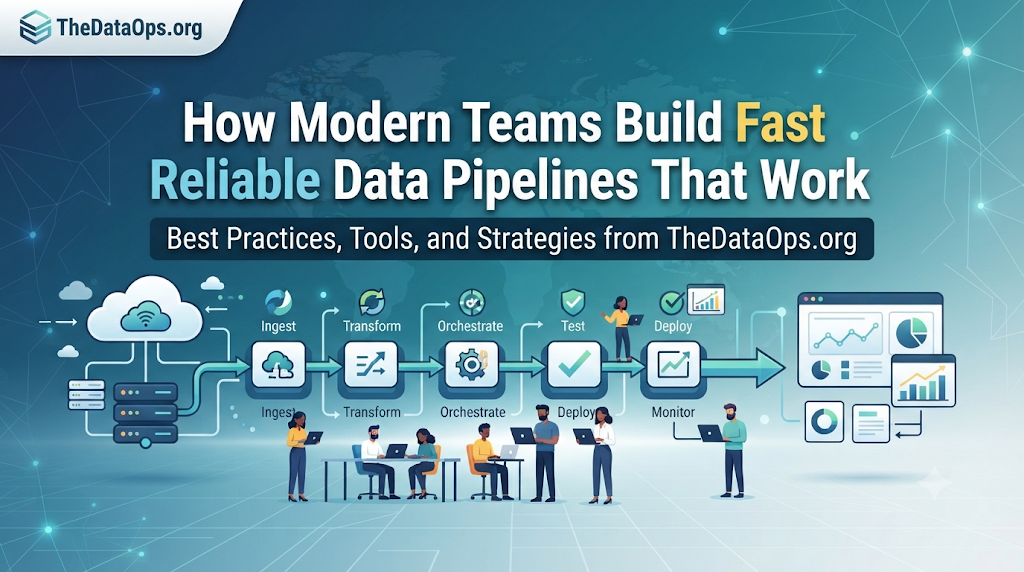
DataOps brings together the people who build data systems and the people who run them. It uses ideas from software development to make data delivery fast and dependable. Instead of treating work as a one-time project, teams view it as a continuous factory line.
Connecting Engineering and Operations
Data engineers write instructions to gather and clean records. Operations specialists manage the computers and cloud systems where those jobs run. Without close teamwork, small code changes can crash live databases. DataOps connects these groups so they share tools, track changes together, and catch problems before business reports break.
The Role of Continuous Delivery
Continuous integration and delivery means that every small change gets tested right away. When an engineer updates a cleaning script, automated checks test the logic immediately. If the test passes, the system moves the new script into production without manual copy-and-paste steps. This keeps data delivery dependable around the clock.
DataOps Training
Learning these modern practices requires clear guidance and hands-on practice. Professional DataOps Training teaches technical workers how to connect storage buckets, orchestrators, and automated testing tools into one reliable workflow.
Through structured training, students learn how to build pipelines using Agile methods. They practice writing automated checks, configuring cloud infrastructure, and watching systems for errors. Educational resources provided by TheDataOps.org help engineers study these important skills step by step so they can run production systems with confidence.
DataOps Certification
Earning a DataOps Certification is a practical way for engineers to confirm their skills. It shows that a worker understands automated pipelines, data quality checks, and system monitoring.
While a credential demonstrates knowledge, hands-on practice remains essential. The best way to prepare is to build real projects, test pipelines, and practice fixing broken data jobs. Studying core architecture topics before taking an exam helps learners build deep, lasting competence.
DataOps Course
A comprehensive DataOps Course helps learners advance from basic ideas to advanced production systems. It usually starts with core data storage and command-line concepts.
Next, the lessons introduce pipeline automation, scheduled tasks, and testing scripts. Students learn how to connect containers, manage secret credentials safely, and set up alert dashboards. A well-organized learning path makes complex cloud systems feel simple and manageable.
DataOps Tools
Teams use different tools to handle each step of the data journey. Instead of relying on a single tool, engineers pick specialized programs that work well together.
- Apache Airflow: Organizes tasks and makes sure jobs run in the right order.
- Apache Kafka: Moves streaming records instantly like a high-speed conveyor belt.
- Apache Spark: Processes massive piles of numbers across multiple computers quickly.
- Jenkins: Runs automated test scripts whenever someone updates pipeline code.
- Grafana: Displays visual charts and sends alerts when pipelines slow down.
- Kubernetes: Manages software containers so data jobs always have enough computing power.
Using these DataOps Tools properly ensures that every stage of processing remains stable and easy to maintain.
DataOps Platform
A unified DataOps Platform connects collection, transformation, testing, and delivery in one central hub. Instead of checking six different screens, workers manage everything from a shared workspace.
When storage, scheduling, and governance run in one environment, tracking errors becomes much simpler. If an ingestion task stops, the platform prevents corrupted numbers from reaching the business dashboard. This tight integration keeps enterprise records clean and organized.
Data Pipeline Automation
Data Pipeline Automation means letting software run data workflows without human intervention. Think of it like a smart water purification system. Raw water enters from a river, flows through filters, gets tested for purity, and fills clean storage tanks automatically.
In a software pipeline, raw records arrive on a set schedule. Automated programs clean the text, run validation scripts, and load the final tables into a data warehouse. If an error happens, the system pauses the flow and alerts the engineers right away. This eliminates tedious manual tasks and saves hours of effort.
Data Observability
Data Observability gives teams deep visibility into how their data systems behave over time. It is not just checking if a job finished with a green checkmark. A job can finish successfully even if it wrote zero rows or wrote duplicate records.
True observability watches five vital signs: data freshness, data volume, schema changes, distribution anomalies, and pipeline lineage. For instance, if an orders table normally gets ten thousand rows an hour but suddenly receives ten, observability tools trigger an alert immediately.
Data Quality Management
Data Quality Management is the ongoing practice of keeping numbers accurate, complete, and consistent. Poor data leads directly to poor business choices. For example, if a store website records sales amounts without currency tags, monthly profit reports will be incorrect.
Teams protect quality by writing rules that check every row before it enters main storage. These rules verify that email fields contain an “@” sign, purchase totals are not negative, and customer IDs are never empty. When records violate these checks, the system sets them aside for inspection.
DataOps Engineer
A DataOps Engineer builds, automates, and monitors the pipelines that deliver business information. They spend their days writing code, creating automated tests, and improving cloud performance.
These specialists work with programming languages like Python and SQL. They also manage Docker containers, write orchestration files, and set up monitoring dashboards. Their main goal is simple: ensure clean data arrives on time every single day.
Practical DataOps Example
Imagine an online grocery store that receives thousands of orders every hour. The company needs up-to-date sales figures so managers can restock empty shelves quickly.
First, an automated job collects order logs from the website every fifteen minutes. Next, a transformation script calculates total sales and removes test purchases. Before saving the results, automated tests verify that all prices are positive numbers and that order dates match today’s date.
Once these checks pass, the script loads the clean numbers into the main reporting database. A monitoring dashboard refreshes automatically, showing managers exactly which products need restocking. If a bad file arrives, the automated pipeline isolates it and notifies the engineering team instantly.
Real-World Use Cases
Many industries rely on stable data operations to serve their customers well.
- Healthcare: Hospitals use automated pipelines to combine patient records and lab results quickly, helping doctors make timely treatment choices.
- Retail: Supermarkets track inventory across hundreds of locations to avoid stock shortages and reduce food waste.
- Banking: Financial firms monitor transactions continuously to detect fraudulent card charges before damage spreads.
- Manufacturing: Factories analyze machine heat and vibration sensors to repair equipment before parts break down.
Benefits
Adopting structured operational habits provides measurable advantages to technical teams and business leaders alike.
- Faster Delivery: Clean reports reach decision-makers in minutes rather than days.
- Higher Accuracy: Automated testing catches typos and broken fields before numbers reach executive dashboards.
- Less Manual Effort: Engineers spend less time fixing broken files by hand and more time building helpful features.
- Quick Incident Detection: Alerts notify engineers the moment a pipeline stalls, reducing downtime.
- Smooth Collaboration: Analysts and developers share common workflows, reducing misunderstandings across departments.
Common Challenges
Changing how an organization handles data can be difficult. Many companies struggle with messy legacy systems that were built without documentation. When old pipelines fail, nobody knows who is responsible for fixing them.
Another common hurdle is having too many disconnected tools. Teams often buy different software for storage, scheduling, and monitoring without making sure they work together. Organizations looking to solve these integration issues often use DataOps Consulting to design clear, unified architectures that fit their business goals.
Common Mistakes
Teams often make predictable errors when starting their modernization journey.
- Automating Broken Systems: Automating a bad process only creates bad results faster. Clean up the workflow first.
- Testing Code but Ignoring Data: Checking if a Python script runs is not enough; you must also check if the output values make sense.
- Tool Overload: Buying every popular tool creates confusing systems that are hard to manage.
- Neglecting Documentation: When pipelines lack simple instructions, fixing unexpected outages takes twice as long.
Best Practices
Following a few simple rules makes data pipelines far more reliable.
- Keep Code in Version Control: Store all pipeline scripts and configuration files in a shared repository so every change is tracked.
- Test Early and Often: Run data validation checks at the start, middle, and end of every pipeline run.
- Monitor System Health: Watch computer memory, disk space, and processing time so you can spot bottlenecks early.
- Define Clear Ownership: Make sure every dataset and pipeline has a designated team responsible for its health.
Security and Governance
Data systems must protect private information at every step. Governance ensures that only authorized workers can read sensitive records like home addresses and credit card numbers.
Engineers use encryption to scramble files while they move across networks and while they sit in storage buckets. Pipelines must also log every access event. This creates an audit trail that proves the company complies with privacy laws and industry standards.
DataOps and AI
Artificial intelligence models require massive volumes of clean information to give helpful answers. If an AI system trains on old or corrupted data, its predictions will be untrustworthy.
DataOps provides the steady foundation that machine learning projects need. It automates feature preparation, tracks where raw training sets come from, and monitors model performance in production. Reliable pipelines make AI systems repeatable, safe, and effective.
Career Learning
Building a career in modern data engineering requires steady study and hands-on practice. Beginners should start by learning Python for scripting and SQL for database queries.
After mastering basic coding, learners should explore container tools and cloud storage options. Building personal projects that download public datasets, clean the text, and display the results on simple dashboards is a great way to gain experience. Following structured learning materials from TheDataOps.org can help aspiring engineers build practical skills step by step.
Who Can Benefit From TheDataOps.org
Different technical professionals find value in structured learning resources tailored to modern data operations.
Beginners
Newcomers can learn core terminology, basic pipeline concepts, and cloud fundamentals without feeling overwhelmed by heavy jargon.
Data Engineers
Experienced pipeline builders can discover better ways to automate tests, manage code changes, and improve pipeline speed.
DataOps Engineers
Practicing specialists can stay current on container orchestration, observability frameworks, and modern architecture patterns.
DevOps Professionals
System administrators can learn how managing data workflows differs from managing traditional software applications.
Analytics Professionals
Data analysts can learn how to write automated data validation rules, ensuring their reporting tables stay accurate.
Organizations
Companies can train their technical teams on unified workflows, reducing pipeline downtime and improving data delivery.
How to Use TheDataOps.org for Learning
A structured approach makes studying modern operational practices smooth and rewarding.
- Start by learning the core principles of pipeline automation.
- Study how orchestration tools manage scheduled jobs.
- Practice writing data testing rules using sample files.
- Explore how observability tools track system freshness and volume.
- Review security best practices for cloud data storage.
- Apply these lessons to build an automated end-to-end project.
Essential Tools and Practices
The following table summarizes common operational categories, their primary goals, and widely used software tools.
| DataOps Area | Main Purpose | Example Tools |
| Orchestration | Schedules tasks and manages job order | Apache Airflow |
| Streaming | Moves high-speed event records continuously | Apache Kafka |
| Processing | Transforms large datasets across clusters | Apache Spark |
| Testing & CI/CD | Automates code checks and deployments | Jenkins |
| Observability | Monitors system health and triggers alerts | Grafana |
The next table outlines essential technical skills, why they matter, and how engineers use them daily.
| Core Skill | Why It Matters | Practical Use |
| Python Scripting | Automates repetitive transformations | Writing pipeline logic and data cleaning scripts |
| SQL Querying | Extracts and checks stored records | Validating row counts and checking table schemas |
| Infrastructure Automation | Creates repeatable computing environments | Configuring cloud storage and container clusters |
| System Monitoring | Spots failures before users notice them | Setting up alerts for slow jobs or missing files |
Frequently Asked Questions
What is DataOps?
DataOps is an operational approach that connects data engineering and system operations. It uses automation, testing, and continuous delivery to provide reliable data quickly.
Why is pipeline automation necessary?
Automation removes the need for manual copy-and-paste steps. This reduces human error, speeds up processing, and ensures that dashboards update on time.
What does DataOps Training cover?
It teaches learners how to build, test, automate, and monitor data pipelines using modern cloud tools and Agile practices.
Is earning a DataOps Certification helpful?
Yes, a certification validates your understanding of core pipeline concepts and automation practices, showing employers that you understand production workflows.
What topics are included in a DataOps Course?
A typical course covers data ingestion, transformation logic, orchestration engines, automated quality checks, and system monitoring.
What do DataOps Tools do?
These tools handle specialized pipeline tasks such as scheduling jobs, streaming events, processing large files, and tracking system errors.
What is the role of a DataOps Platform?
A platform combines storage, orchestration, monitoring, and governance into a single environment, making complex workflows much easier to manage.
How does Data Observability help teams?
Observability tracks pipeline health, data freshness, and volume anomalies so engineers can fix hidden errors before business reports are affected.
Why is Data Quality Management important?
It checks records for accuracy, completeness, and consistency, preventing bad or missing numbers from corrupting business decisions.
What are the primary duties of a DataOps Engineer?
A DataOps Engineer writes automation scripts, configures orchestration systems, monitors pipelines for failures, and helps teams deliver reliable information.
Final Thought
Reliable data operations transform how companies work. When pipelines run automatically and quality checks catch mistakes early, organizations make decisions with total confidence. Success requires the right balance of clear processes, practical tools, and continuous team learning. By studying modern practices through educational platforms like TheDataOps.org, engineers and technical leaders can build fast, dependable data systems that stand the test of time.
Leave a Reply