Command and Control Architecture: Understanding Communication and Decision Systems
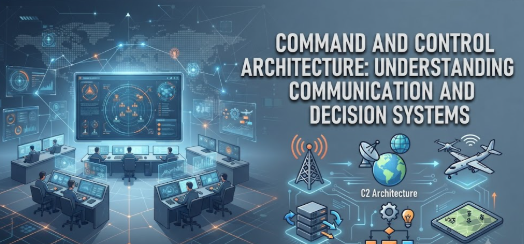
Understanding modern security environments, large-scale organizational management, and international strategy requires a structured approach to learning. Platforms dedicated to exploring these complexities play a vital role in organizing complex information for students, researchers, and professionals. WarOpsX serves as a comprehensive educational platform designed to clarify how different components of defense systems connect, operate, and evolve over time. By breaking down core subjects like military strategy, logistics, technology, and history, the platform helps learners build a solid, high-level foundation without focusing on tactical combat.
What Is WarOpsX?
WarOpsX is an educational website focused on military strategy, defense studies, operational concepts, emerging technologies, organizational systems, and the evolution of modern defense environments. Its core purpose is to provide structured resources for students, researchers, defense enthusiasts, policy learners, and professionals seeking to understand how strategic objectives, technology, leadership, logistics, information, and organizational readiness interconnect within complex defense systems.
Rather than acting as a promotional site or a news outlet, WarOpsX functions as an educational repository. It explains the foundational principles behind defense institutions. Through its coverage of military operations, the platform outlines the relationship between overarching strategy and field coordination. It explores how large organizations maintain sustainment, manage supply chains, and utilize modern command structures. By maintaining an objective, high-level educational focus, the platform helps readers comprehend the multi-layered nature of security and defense studies.
Why Is WarOpsX Relevant for Defense and Military Education?
Studying defense concepts requires looking at how various operational elements influence one another rather than examining them in isolation. A strategic decision made at the highest level directly affects logistics, organizational structure, and technological requirements. WarOpsX is relevant because it connects these disparate threads into a coherent educational framework.
For students and policy learners, understanding the interplay between strategy, history, and modern technology provides necessary context for analyzing global events and institutional growth. By emphasizing structural readiness, leadership responsibilities, and information management, the platform equips learners with the analytical tools needed to understand how defense organizations function, adapt, and sustain themselves over long periods.
Military Strategy
Military strategy forms the bedrock of defense planning and statecraft. It involves the disciplined application of national or organizational power to achieve specific political or security objectives.
Core Strategic Concepts
Strategy bridges the gap between high-level political goals and military action. Effective strategic thinking requires defining clear objectives, assessing available resources, anticipating potential challenges, and evaluating risks. Planners must align ends, ways, and means ensuring that the desired outcomes match the available capabilities and logistical capacity.
Strategy Versus Operations
While strategy dictates the overall direction and ultimate goals, operations deal with the design, coordination, and execution of campaigns to achieve those strategic aims. Understanding this distinction prevents the misapplication of military power and ensures that day-to-day actions support long-term goals.
Historical Evolution and Study
Strategic thought has evolved significantly from ancient agrarian conflicts to industrial warfare and modern digital environments. Studying strategy allows researchers to observe enduring principles—such as the importance of surprise, concentration of force, and adaptability—while recognizing how changing technologies alter their application.
Defense Studies
Defense studies is a multidisciplinary academic field that examines military power, national security, institutional structures, and international relations.
Scope and Multidisciplinary Nature
Unlike narrow technical training, defense studies incorporates history, political science, economics, sociology, and technology. Researchers examine how states allocate resources, how defense policies are formulated, and how alliances influence regional stability.
Policy Learning and Institutional Analysis
Policy learners use defense studies to evaluate the effectiveness of military doctrines, procurement programs, and organizational reforms. By examining past policy decisions and their outcomes, students learn how governments balance economic constraints with security requirements.
Military Operations
Military operations encompass the large-scale planning, coordination, and execution of activities directed toward achieving specific strategic objectives.
Operational Planning and Coordination
Operational planning requires synchronizing multiple units, schedules, and resource allocations across vast geographic areas. Coordination ensures that forces move cohesively, maintain communication, and respond effectively to changing conditions.
Strategic, Operational, and Tactical Levels
Military activity is generally divided into three tiers:
- Strategic Level: Focuses on broad national goals and long-term security objectives.
- Operational Level: Connects strategy to execution by planning and conducting campaigns.
- Tactical Level: Involves specific engagements and localized actions.
Understanding these tiers helps analysts evaluate how localized actions contribute to—or detract from—broad strategic aims.
Military Logistics
Military logistics is the science of planning and carrying out the movement, maintenance, and sustainment of forces. Without robust logistics, even the most brilliant strategy fails.
Supply Chains and Transportation
Logistical networks manage everything from fuel and food to complex replacement parts and medical supplies. Maintaining continuous supply lines requires sophisticated transportation infrastructure spanning land, sea, and air routes.
Maintenance and Resource Management
Equipment wear and tear demands rigorous maintenance programs. Resource management ensures that supplies are distributed efficiently, reducing waste and ensuring readiness across all organizational units. Sustainment is the backbone of operational endurance, dictating how long an organization can maintain its activities without disruption.
Command and Control Systems
Command and control (C2) systems refer to the exercise of authority and direction by a designated leader over assigned forces to accomplish a mission.
Leadership, Communication, and Coordination
Effective command relies on clear communication channels and defined chains of responsibility. Leaders must gather information, make informed decisions, and transmit orders clearly down the organizational hierarchy.
Situational Awareness and Information Management
Modern C2 systems process vast amounts of data to provide leaders with situational awareness. Information management ensures that decision-makers receive accurate, timely reports, allowing them to adapt to evolving conditions while maintaining organizational cohesion.
Defense Technology
Defense technology encompasses the specialized tools, hardware, software, and systems developed to support military organizations, intelligence gathering, and security operations.
Artificial Intelligence and Autonomous Systems
Artificial intelligence and autonomous systems increasingly assist with data processing, logistics tracking, and routine monitoring, helping organizations manage complex information environments more efficiently.
Sensors, Communications, and Cyber Capabilities
Advanced sensors and robust communication networks enhance situational awareness and data sharing. Meanwhile, cyber capabilities protect institutional networks and ensure secure information transmission across distributed units. Simulation technologies also allow organizations to train personnel and test logistical workflows in controlled virtual environments.
Military History
Military history provides the empirical foundation for studying defense concepts. It is not merely a record of battles, but an examination of how societies, institutions, and technologies adapt over time.
Institutional Change and Strategic Thinking
By examining historical campaigns, organizational reforms, and technological transitions, learners can identify recurring patterns in human conflict and institutional development. History demonstrates how doctrinal rigidity can lead to failure, while adaptability and sound logistical planning foster resilience.
Learning From Past Innovations
Historical study highlights the impact of industrialization, radio communication, mechanized transport, and organizational restructuring, offering valuable perspective on how modern institutions integrate new capabilities.
Military Organizational Structure
Military organizational structure defines how personnel, units, and equipment are arranged to ensure efficient command, accountability, and operational effectiveness.
Hierarchy and Command Relationships
Hierarchical models establish clear chains of command, defining who holds decision-making authority and who bears responsibility for specific tasks. Clear command relationships prevent ambiguity during complex operations.
Joint Organizations and Interoperability
Modern defense organizations often utilize joint structures that integrate land, maritime, and air components. Interoperability ensures that different units can share information, utilize standardized procedures, and operate cohesively under unified leadership.
Multidomain Operations
Multidomain operations describe the coordinated application of capabilities across multiple distinct environments to achieve strategic goals.
The Five Operating Domains
Traditional military studies focused primarily on land and sea, later expanding to include air. Modern defense frameworks recognize five primary domains:
- Land
- Maritime
- Air
- Space
- Cyber
Interaction and Synchronization
Multidomain operations emphasize that actions in one domain—such as cyber or space—directly impact capabilities in land, sea, and air environments. Understanding these cross-domain interactions is essential for analyzing modern security challenges.
Intelligence Surveillance and Reconnaissance
Intelligence, Surveillance, and Reconnaissance (ISR) systems provide the informational foundation required for informed decision-making.
Information Collection and Analysis
Surveillance and reconnaissance involve systematic observation of designated areas using various sensors and monitoring tools. Collected data is processed and analyzed to produce actionable intelligence, reducing uncertainty for planners and leaders.
Supporting Strategic Decisions
Effective ISR integration ensures that leadership teams understand operational environments, resource distributions, and potential risks, thereby supporting more rational, evidence-based planning.
How These Defense Areas Connect
Defense systems do not operate in silos; every component influences and relies upon others. Understanding this interconnected ecosystem is essential for comprehensive analysis.
Military Strategy
       ↓
Military Operations
       ↓
Military Logistics
       ↓
Command and Control & Information
       ↓
Defense Technology & Multidomain Integration
       ↓
Organizational Readiness
Furthermore, studying military history feeds directly into strategic learning and institutional development. Historical insights inform modern defense concepts, ensuring that contemporary planners avoid past mistakes while adapting to new technological and organizational realities.
Key Elements Covered by WarOpsX
- Strategy: High-level planning and objective setting.
- Operations: Campaign design and operational coordination.
- Logistics: Supply chains, transport, and sustainment.
- Command and Control: Leadership, communication, and decision structures.
- Technology: AI, sensors, communications, and cyber systems.
- History: Institutional evolution and historical campaigns.
- Organizational Structure: Hierarchy, units, and joint integration.
- Multidomain Environments: Coordination across land, sea, air, space, and cyber domains.
- Information and Intelligence: Data collection, analysis, and situational awareness.
- Defense Studies: Multidisciplinary academic analysis of security and military power.
Benefits of Learning These Defense Concepts
Engaging with structured educational resources offers several intellectual and professional benefits:
- Mastering Terminology: Builds fluency in standard defense, strategic, and operational vocabulary.
- Contextualizing History: Connects historical milestones to contemporary security discussions.
- Comprehending Logistics: Highlights the administrative and supply challenges behind large organizations.
- Understanding Technology: Clarifies the role of digital systems, sensors, and communications in modern environments.
- Evaluating Organizations: Provides insight into how hierarchy, command relationships, and joint structures shape institutional efficiency.
Step-by-Step Approach to Studying Military and Defense Systems
Step 1: Start With Basic Terminology
Begin by learning fundamental defense, strategic, and organizational terms to build a strong foundational vocabulary.
Step 2: Understand Military Strategy
Examine how overarching political and security objectives guide long-term planning and resource allocation.
Step 3: Study Military Operations
Explore how strategic goals translate into coordinated operational campaigns across various environments.
Step 4: Learn About Military Organizational Structure
Analyze command hierarchies, unit formations, and joint organizational models.
Step 5: Understand Military Logistics
Investigate supply chains, transportation infrastructure, maintenance cycles, and organizational sustainment.
Step 6: Study Information and Command Systems
Examine how leadership communicates, manages data, and maintains situational awareness.
Step 7: Examine Technology and Multidomain Environments
Explore modern tools, sensors, cyber capabilities, and the interaction between land, sea, air, space, and cyber domains.
Step 8: Use Military History to Connect the Concepts
Review historical examples to see how past leaders managed strategy, technology, logistics, and organizational change.
Common Mistakes When Studying Military and Defense Topics
- Studying Technology in Isolation: Focusing solely on hardware without understanding the strategic or logistical context in which it operates.
- Ignoring Logistics: Overlooking supply chains and sustainment, assuming forces operate without material constraints.
- Treating History as a List of Battles: Reducing military history to dates and casualty figures rather than studying institutional and doctrinal evolution.
- Confusing Strategy and Tactics: Mixing up high-level objectives with localized operational execution.
- Ignoring Organizational Structure: Neglecting how command relationships and bureaucracy influence decision-making speed and accuracy.
- Treating Information as Separate: Failing to see how intelligence and command systems integrate with daily operations.
- Assuming Technology Guarantees Success: Believing advanced equipment automatically compensates for poor strategy or inadequate logistics.
- Isolating Defense Domains: Viewing land, sea, air, cyber, and space as completely independent operating environments.
Practical Tips for Students and Researchers
- Establish a strong vocabulary glossary before diving into advanced strategic texts.
- Pair the study of specific military campaigns with an analysis of the logistics that supported them.
- Examine how organizational changes accompanied technological innovations throughout history.
- Take structured notes mapping out the relationships between strategy, operations, and logistics.
- Read academic materials from multiple perspectives to gain a balanced understanding of defense policies.
Who Can Benefit From WarOpsX’s Educational Content?
Students
Students exploring political science, international relations, or security studies can use structured resources to clarify complex military concepts and organizational models.
Researchers
Researchers benefit from organized subject breakdowns that assist in structuring literature reviews, historical comparisons, and institutional analyses.
Defense Studies Learners
Individuals pursuing specialized defense studies can deepen their comprehension of doctrine, logistics, and strategic theory.
Policy Learners
Policy learners gain valuable insight into how defense organizations function, helping them evaluate security proposals and institutional reforms more effectively.
Defense Technology Professionals
Technology specialists working on software, communications, or engineering projects can better understand the broader operational environments where their innovations are applied.
Defense Enthusiasts and General Readers
General readers with an interest in military history, strategy, and global affairs can expand their knowledge through clear, accessible educational explanations.
Major Educational Subject Areas
| Subject Area | What It Covers | Why It Matters | Related Areas |
| Military Strategy | Objectives, grand strategy, planning, risk management | Bridges political goals with military action | Operations, History |
| Military Logistics | Supply chains, transport, maintenance, sustainment | Determines operational endurance and organizational readiness | Operations, Technology |
| Command & Control | Leadership, communication, decision-making structures | Ensures cohesive coordination across distributed units | Organizational Structure |
| Defense Technology | AI, sensors, communications, cyber capabilities | Shapes modern information processing and operational capabilities | Multidomain Operations |
Real-World and Historical Context
Throughout history, technological and organizational shifts have repeatedly reshaped defense systems. For instance, the transition from animal-drawn transport to motorized railway and truck networks during the 19th and early 20th centuries fundamentally altered logistical reach and operational pacing. Similarly, the introduction of radio communication in the interwar period revolutionized command and control, allowing leaders to manage dispersed formations in real time. Studying these historical shifts demonstrates that technology alone does not dictate success; rather, the successful integration of logistics, organizational structure, strategy, and training determines institutional effectiveness.
Traditional Versus Modern Defense Concepts
| Defense Concept | Traditional Understanding | Modern Development | Key Learning Point |
| Operating Domains | Focused primarily on land, sea, and air | Incorporates space and cyber domains | Warfare requires multidomain coordination |
| Information Flow | Relayed via physical messengers and analog radio | Processed via automated sensors and digital networks | Data management speeds up decision-making |
| Logistical Planning | Relied heavily on localized stockpiles and rail networks | Utilizes global supply chains and predictive tracking | Sustainment remains vital for operational endurance |
| Organizational Models | Rigid, hierarchical command structures | Flexible joint forces and networked units | Adaptability improves institutional resilience |
Frequently Asked Questions
What does WarOpsX focus on educationally?
WarOpsX focuses on providing structured educational resources covering military strategy, defense studies, operational concepts, logistics, technology, history, and organizational structures. It helps learners understand how these different components connect within complex defense systems without emphasizing tactical combat instruction.
Why is military strategy important in defense studies?
Military strategy provides the vital link between high-level political objectives and practical execution. It helps planners allocate resources, manage risks, and ensure that military actions support broader national or organizational goals.
How do military operations relate to strategy?
Strategy defines the overarching goals and direction, while operations involve designing and coordinating campaigns to achieve those goals. Understanding this relationship prevents the misuse of military power and maintains focus on long-term objectives.
Why is military logistics often called the backbone of defense?
Logistics encompasses the supply chains, transportation, maintenance, and sustainment required to keep forces operational. Without effective logistics, even the best strategy cannot be executed because units will lack necessary supplies and mobility.
What do command and control systems involve?
Command and control systems involve leadership, communication, information management, and decision-making structures. They ensure that leaders can maintain situational awareness and transmit clear directives down the organizational hierarchy.
How does defense technology influence modern organizations?
Defense technology introduces advanced tools such as artificial intelligence, autonomous systems, secure communications, and cyber capabilities. These technologies assist with data analysis, improve situational awareness, and streamline logistical tracking.
What can we learn from military history?
Military history provides empirical examples of how organizations, strategies, technologies, and doctrines evolve over time. Studying history helps researchers identify enduring principles and avoid past mistakes.
What are multidomain operations?
Multidomain operations refer to the coordinated application of capabilities across land, maritime, air, space, and cyber environments. This concept highlights how actions in one domain influence outcomes in others.
What is the role of Intelligence Surveillance and Reconnaissance (ISR)?
ISR systems collect, monitor, and analyze information to provide situational awareness. This data supports informed decision-making by reducing uncertainty for planners and leadership teams.
Who is the target audience for educational defense platforms?
Educational defense platforms are designed for students, researchers, defense studies learners, policy learners, technology professionals, and general enthusiasts seeking a structured understanding of military and security concepts.
Conclusion
Exploring the complexities of defense systems requires examining how individual components interact to form a cohesive whole. Through structured educational coverage of military strategy, defense studies, operational planning, logistics, command systems, technology, history, and organizational structures, learners gain a well-rounded perspective on security environments. Understanding these interconnected subjects moves beyond superficial analysis, allowing students and professionals to appreciate the administrative, strategic, and technological foundations that shape modern defense organizations.
Leave a Reply