Digestive Care Made Clear: Symptoms, Specialists, Tests, and Treatment Choices
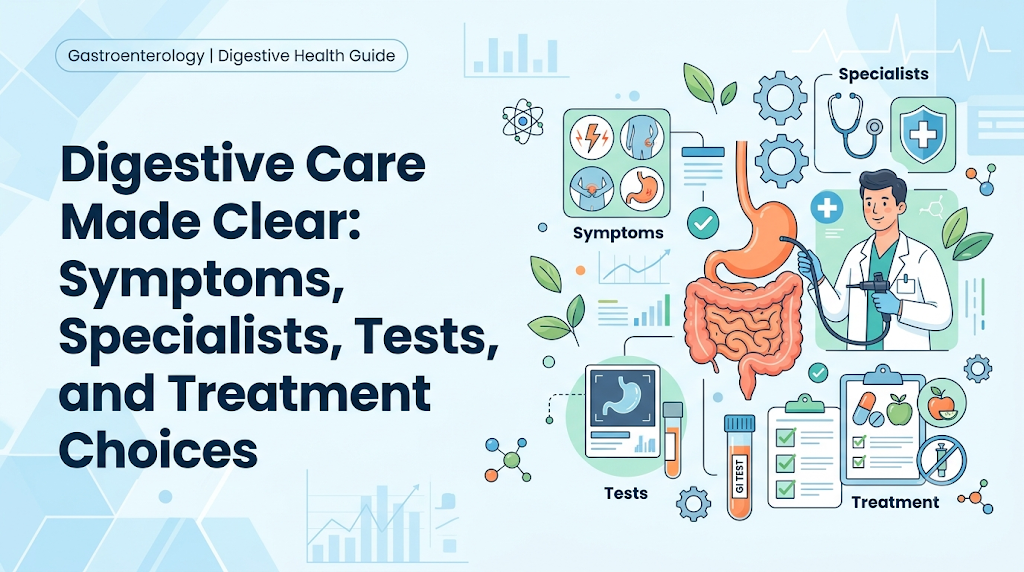
When your stomach or gut keeps giving you trouble, it can feel hard to know where to turn. Some problems fade on their own. Others need a closer look from a doctor. Knowing the basics of gastroenterology helps you understand what you are dealing with and what kind of care may follow.
Gastroenterology is the medical field focused on the digestive system and the liver. It includes everyday issues like acid reflux as well as long-term conditions that need years of care. Many families read about it before a first appointment so they can follow what the doctor says.
GastroHospitals is a digestive-health platform made for this kind of learning. It brings together hospital information, condition guides, procedures, and surgery topics for patients and caregivers. In this article, we will cover how digestive care works, from the first signs to specialist treatment. The information is general and does not replace advice from a qualified doctor.
Your Digestive System in Plain Words
Think of your digestive system as one long road. Food starts in the mouth, then travels down the esophagus, which is the food pipe. It lands in the stomach, where acid and muscle action break it down. Next, it moves to the small intestine, where most nutrients are absorbed. Finally, the colon takes in water and prepares waste for removal.
Along this road, three organs work as support staff. The liver makes bile and filters the blood. The gallbladder stores that bile. The pancreas produces juices that help the body use food and also helps manage blood sugar.
Gastroenterology covers the whole road and every one of these helpers. When one part struggles, you may feel it in your appetite, energy, or comfort.
Who Looks After Gut Problems?
A gastroenterologist is a doctor who specializes in the digestive tract and liver. They listen to your history, run tests, find the cause of a problem, and guide treatment. Some of them also perform procedures that let them see inside the body.
You usually reach a specialist through your regular doctor. This often happens when symptoms stay for a long time, return again and again, or do not improve with basic care. Examples include ongoing belly pain, trouble swallowing, frequent vomiting, or bowel habits that change and stay changed. None of these signs points to one fixed cause. A healthcare professional can evaluate persistent or concerning symptoms and decide whether specialist care is needed.
Different Kinds of Gut and Liver Trouble
Digestive disorders is a broad label. It covers any health problem that interferes with how the digestive organs work. Some are brief, like food poisoning. Others stay with a person for life and need regular monitoring.
The problem can begin almost anywhere along the system. Acid can irritate the esophagus. The stomach lining can become sore. The intestines and colon can swell or get infected. The gallbladder can form stones. The pancreas and liver can also be affected by a range of conditions.
Because so many of these conditions share symptoms, doctors need tests to tell them apart. That is why self-diagnosis often leads people in the wrong direction.
What Shapes a Treatment Plan
Gastroenterology treatments are never copied from one person to the next. A doctor looks at what the diagnosis is, how strong the symptoms are, how long they have lasted, and what else is going on with your health. Age, other illnesses, and daily routines can also matter.
Care can include changes in food and habits, medicines from a doctor, procedures done with a scope, or surgery. Many people receive a mix, and the plan may shift over time. A proper medical review is the only safe way to decide which path fits.
Walking Through Four Common Conditions
The stomach bug that will not quit
Gastroenteritis is irritation of the stomach and intestines, most often from an infection. People may have watery stools, throwing up, cramps, and a weak, tired feeling. Gastroenteritis treatment often focuses on resting and replacing the fluids the body loses. A doctor decides whether anything extra is needed. It is wise to seek care if someone cannot hold down liquids, seems confused or very sleepy, or keeps getting worse. Small children and older adults are at higher risk of dehydration.
Acid that climbs the wrong way
GERD means stomach contents keep moving back up toward the food pipe. It often brings a burning feeling in the chest, a sour taste, or a sense of food coming back up. GERD treatment commonly begins with changes in habits and medicines recommended by a doctor. If those steps are not enough, a doctor may discuss other options, including anti-reflux surgery. Because chest discomfort can come from non-digestive causes too, it should always be checked properly.
When the gut stays inflamed
IBD stands for inflammatory bowel disease. In these conditions, the gut lining remains swollen and irritated for long stretches. People may notice repeated diarrhea, stomach pain, tiredness, or unplanned weight loss. IBD treatment usually involves ongoing care, since symptoms can calm down for a while and then return. Regular visits help the care team adjust the plan.
A liver that needs attention
The liver supports digestion, cleans the blood, and stores energy. When it is under strain, signs can include yellow eyes or skin, swelling in the belly or legs, or constant fatigue. Some people feel nothing in the early stages. Liver disease treatment depends on the cause and how much the organ is affected. It may involve regular monitoring and medicines, and in more serious cases, steps such as liver resection or transplantation.
How Doctors Figure Out the Cause
A stomach ache alone cannot tell a doctor much. So the process usually starts with a conversation. The doctor asks about your symptoms, diet, medicines, and family history, then examines your abdomen.
From there, tests may be added. These can include blood work, stool checks, scans, or scope procedures that give a direct view inside the gut. Each test has a purpose, and together they help the doctor build a clearer picture before choosing a course of action.
Procedures That Help Doctors See and Treat
Some procedures are used to look for answers. Others are used to treat a problem. Many rely on a thin, flexible tube with a light and tiny camera, which is gently guided through the body.
The colonoscopy procedure is a common example. A doctor uses the scope to look at the lining of the colon and rectum. It may be used to explore symptoms such as bleeding or long-lasting changes in bowel habits, to check for swelling, or to spot unusual growths. The care team provides preparation instructions and explains comfort measures, and these vary by person.
Other scope procedures can examine the food pipe, stomach, and the start of the small intestine. In some cases, a doctor can treat an issue during the same session. The GastroHospitals procedure directory groups these endoscopic interventions with other digestive-care procedures, making it easier to understand how each one is used.
When a Doctor Considers an Operation
Surgery is not the first step for most digestive conditions. Many improve with medicines, daily habit changes, or scope-based care. Gastrointestinal surgery is usually considered when other approaches have not been enough or when the condition calls for it.
The operations most often mentioned in this field include:
- Colectomy: removing part or all of the colon.
- Gastrectomy: removing part or all of the stomach.
- Anti-reflux surgery: reinforcing the area between the stomach and food pipe to limit backflow.
- Gallbladder removal: taking out the gallbladder, often when stones or related problems cause trouble.
- Pancreatic surgery: operating on the pancreas to treat certain conditions.
- Liver resection: removing the diseased portion of the liver.
- Transplantation: replacing a failing organ with a healthy donor organ.
Whether any of these is right for a person depends on their medical condition and a careful assessment by a qualified team.
Reading About Hospitals Without Getting Lost
Families often search for the best hospitals for gastroenterology. The challenge is that “best” means different things in different situations. A hospital that is strong in one area may not be the closest match for another.
A more useful approach is to learn which details to look at. Check the digestive specialties a hospital works in and the procedures it offers. Look at the specialist services available, such as endoscopy, liver care, or care for the pancreas. Notice whether the facilities support advanced treatment where needed. Clear and easy patient information is also a good sign. This kind of research prepares you to ask better questions, while the final decision stays between you and your doctor.
Inside GastroHospitals: The Areas It Brings Together
GastroHospitals sets out to connect many parts of digestive care in one space. According to the supplied information, it features a directory of 50 leading gastroenterology hospitals and arranges its content around several linked areas.
Hospital discovery. Readers can look through hospitals and see how they connect to different digestive-care needs, which gives research a clear starting point.
Specialist information. Pages on specialist topics explain what different doctors do, so that a referral or first visit feels less confusing.
Digestive diseases. Conditions of the esophagus, stomach, intestines, colon, liver, gallbladder, and pancreas are described in simple language.
Treatment guides. These cover symptoms, how a diagnosis is reached, general treatment approaches, prevention, and signs that call for medical attention.
Procedures and surgeries. A directory explains tests and treatments, from colonoscopy and endoscopic work to operations such as colectomy, gastrectomy, and transplantation.
Educational articles and patient resources. Blogs and community-focused material help families and caregivers learn without needing a medical background.
Core care areas. The platform is built around GI care, liver care, pancreas care, IBD, endoscopy, and advanced digestive care. Each is a field of its own, and this layout lets readers move from a wide question to a focused one.
Taken together, these pieces tie a condition to the tests, treatments, and type of care that usually go with it.
Five Steps to Research Digestive Care Wisely
- Pin down the concern. Write what you feel, when it began, and what changes it.
- Read about the condition or test. Learn the main terms so the doctor’s words make sense.
- Find out who handles it. See whether it usually involves a specialist, a scope procedure, or hospital-based care.
- Study the usual path. Read about how such conditions are commonly checked and managed.
- Share your notes with a professional. Ask a qualified doctor to apply this to your own case.
Habits That Can Mislead You
- Going by a hospital name alone. A familiar name does not show that it fits your specific need.
- Using general articles as personal advice. They explain topics but cannot name your condition.
- Skipping a proper diagnosis. Without it, picking a treatment is guesswork.
- Choosing by price alone. Cost says little about whether care suits the condition.
- Expecting surgery for every digestive issue. Many problems are handled with simpler steps first.
- Waiting while symptoms grow. Severe or lasting symptoms deserve a prompt medical check.
A Imaginary Case to Picture the Process
Picture a woman in her late fifties who has felt bloated and uncomfortable after meals for a couple of months. She wonders whether she needs a stomach doctor or just a diet change. She reads about how a family doctor often serves as the first stop, how a specialist may step in, and how tests such as scope procedures are used. She writes her symptoms in a notebook, adds a list of questions, and visits her doctor. Because she understands the basics, she can follow the explanation and take part in decisions.
Quick Reference: Care Stages and What to Read About
| Stage of care | Helpful topics to read |
|---|---|
| Noticing a problem | Common symptoms and warning signs |
| First visit | What a general doctor and a gastroenterologist each do |
| Finding the cause | Blood tests, stool tests, scans, and scope procedures |
| Managing the condition | Habit changes, medicines, and long-term follow-up |
| Advanced steps | Types of gastrointestinal surgery and transplantation |
| Choosing where to go | Hospital specialties, services, and facilities |
Your Questions, Answered Simply
1. How do I know if my stomach problem is serious?
Only a doctor can judge that. Symptoms that are severe, long-lasting, or keep returning are worth getting checked.
2. Can stress affect digestion?
Stress can influence how the gut feels for many people, but it is not the only possible cause. A doctor can look at the full picture.
3. Is gastroenteritis treatment the same for children and adults?
Not exactly. Children and older adults can lose fluids faster, so they may need medical attention sooner.
4. Can GERD treatment be done without surgery?
Many people manage with habit changes and medicines. Surgery is usually reserved for cases where other steps are not enough.
5. Does IBD treatment cure the condition?
IBD is typically long-term. Treatment aims to control inflammation and symptoms, and doctors monitor progress over time.
6. What causes problems in the liver?
There are many possible causes, which is why doctors use tests to find the exact reason before planning liver disease treatment.
7. Does a colonoscopy only look for serious illness?
No. Doctors also use it to investigate symptoms and check the lining of the colon for many different reasons.
8. How long is recovery after gastrointestinal surgery?
It depends on the operation and the person. The surgical team explains what to expect in each case.
9. Can hospital information online replace a doctor’s visit?
No. It helps you prepare, but only a qualified professional can assess your health.
Final Thoughts
Digestive health reaches from the food pipe to the colon and includes the liver, gallbladder, and pancreas. Specialists called gastroenterologists use conversations, tests, procedures, medicines, and sometimes surgery to understand and manage these conditions. Learning how each step connects removes much of the fear around the process.
Remember that reading is the start of the journey, not the end. Bring what you learn to a qualified doctor, who can turn general knowledge into a plan that fits your own situation.
Leave a Reply