Driving Digital Reliability Through Intelligent AIOps Consulting and Training
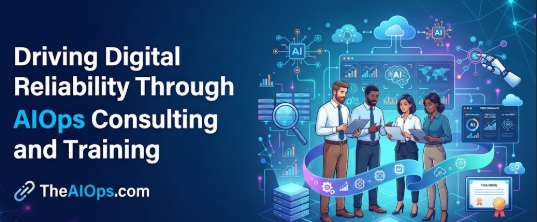
Modern digital infrastructure forms the backbone of global commerce, communication, and entertainment. Enterprises manage sprawling cloud environments, microservices, and distributed applications that generate staggering volumes of operational data every second. When an outage occurs, the financial and reputational costs accumulate rapidly. Traditional monitoring approaches relying on static thresholds and manual intervention are no longer sufficient to handle this complexity. Organizations now turn to intelligent automation platforms to maintain operational continuity and deliver seamless user experiences.
Understanding Intelligent IT Operations
Intelligent IT operations integrate advanced machine learning, big data analytics, and automation into traditional system administration workflows. Rather than treating infrastructure management as a reactive chore, this methodology transforms it into a proactive discipline. Systems ingest telemetry data from logs, metrics, and traces, processing them in real-time to establish baseline behaviors. When deviations occur, analytics engines separate critical signals from background noise, allowing engineering teams to focus on genuine threats rather than false alarms.
Why Intelligent Operations Matter Today
Enterprise architectures scale at an unprecedented rate, rendering manual oversight impossible. Legacy monitoring tools often inundate operations centers with thousands of disconnected alerts during a single incident. This alert fatigue delays root-cause identification and prolongs downtime.
Modern automated operations solve this challenge by correlating disparate events into unified incidents. By predicting bottlenecks and infrastructure failures before they impact end-users, organizations protect revenue streams, enhance service-level agreement compliance, and foster greater trust among their customer base.
Comprehensive Framework for Enterprise Operations
Adopting advanced operational frameworks requires a structured approach encompassing education, validation, execution, and tooling. Specialized knowledge platforms like TheAIOps.com provide comprehensive resources to guide organizations and engineers through this transformation.
Building Expertise Through AIOps Training
Structured educational pathways are essential for technical teams transitioning from reactive monitoring to predictive management. AIOps Training equips professionals with foundational knowledge in data ingestion, anomaly detection algorithms, telemetry parsing, and event filtering techniques, ensuring teams possess the practical skills required for modern environments.
Validating Competence with AIOps Certification
Formal credentials validate an engineer’s technical acumen and commitment to industry best practices. Pursuing an AIOps Certification demonstrates verified expertise in deploying, configuring, and managing automated monitoring ecosystems, boosting professional credibility and organizational readiness.
Comprehensive Curricula in an AIOps Course
An immersive AIOps Course delivers a structured learning journey covering system architectures, algorithmic models, implementation frameworks, and operational governance. Learners explore real-world case studies and master the methodologies needed to tackle complex infrastructure challenges.
Strategic Guidance Through AIOps Consulting
Organizations embarking on digital transformation initiatives often benefit from external expertise. AIOps Consulting offers tailored architectural assessments, automation roadmap development, tool selection advisory, and readiness evaluations to align technology investments with business objectives.
Executing Strategy with AIOps Services
Implementation requires specialized execution capabilities. AIOps Services assist enterprises in integrating monitoring agents, configuring event correlation engines, establishing automated remediation workflows, and aligning operational tooling with existing DevOps pipelines.
Selecting Advanced AIOps Tools
Evaluating the right utility stack is critical for operational success. AIOps Tools encompass specialized software for metric collection, distributed tracing, log aggregation, predictive analytics, and automated incident response, forming the functional core of an intelligent monitoring strategy.
Architecting a Unified AIOps Platform
An enterprise-grade AIOps Platform serves as the central nervous system for IT infrastructure. It unifies data streams across multi-cloud environments, applies machine learning algorithms to identify anomalous patterns, reduces alert noise, and accelerates mean time to resolution.
Executing Seamless AIOps Implementation
Transitioning from legacy monitoring requires meticulous planning and phased execution. AIOps Implementation frameworks guide teams through pilot deployments, data pipeline validation, alert threshold tuning, and organizational change management to ensure smooth adoption.
Career Growth as an AIOps Engineer
As organizations prioritize infrastructure resilience, the demand for specialized talent surges. An AIOps Engineer designs automated remediation scripts, oversees machine learning models, optimizes telemetry pipelines, and bridges the gap between software development and IT operations.
Key Benefits of Intelligent Operations
| Strategic Advantage | Operational Impact |
| Noise Reduction | Filters out up to ninety percent of irrelevant alerts, eliminating operator fatigue. |
| Predictive Resolution | Identifies degradation patterns before user-facing outages materialize. |
| Accelerated Remediation | Automates standard recovery workflows to minimize service disruption. |
Core Implementation Methodology
- Telemetry Ingestion: Collect comprehensive logs, metrics, and event data across all cloud and on-premises environments.
- Baseline Profiling: Apply machine learning models to establish normal operational behavior and traffic patterns.
- Event Correlation: Group related alerts from disparate systems into singular, manageable incidents.
- Automated Remediation: Trigger pre-defined scripts or orchestration workflows to resolve known issues instantly.
Common Pitfalls in Operations Management
- Neglecting Data Quality: Ingesting unstructured or incomplete telemetry, which compromises the accuracy of machine learning models.
- Over-Automating Prematurely: Implementing automated remediation actions without thoroughly validating system responses in staging environments.
- Siloed Implementation: Treating intelligent operations as an isolated tool deployment rather than a holistic cultural and procedural shift.
| Traditional Monitoring vs. Intelligent Operations | Traditional Approach | Intelligent Approach |
| Detection Paradigm | Reactive notification post-failure | Proactive prediction pre-failure |
| Alert Management | High volume of isolated notifications | Correlated incidents with root-cause insights |
| Resolution Speed | Manual investigation and execution | Automated remediation and guided workflows |
Frequently Asked Questions
What defines an intelligent IT operations framework?
It is a methodology that combines machine learning, big data analytics, and automation to streamline infrastructure monitoring and incident management.
How do organizations benefit from automated monitoring?
Organizations experience reduced downtime, lower operational overhead, faster incident resolution, and improved system reliability.
What background is necessary to learn these disciplines?
A working knowledge of system administration, basic data analysis, and cloud infrastructure provides a strong foundation for learners.
How long does a typical implementation take?
Implementation timelines vary based on infrastructure scale, but phased rollouts typically yield initial results within a few months.
Are specialized certifications required for practitioners?
While not mandatory, certifications validate technical competency and accelerate professional development within enterprise environments.
Can small businesses adopt these platforms?
Yes, scalable tools and modular platforms allow organizations of all sizes to implement automated monitoring tailored to their needs.
What distinguishes a platform from standalone tools?
A platform integrates multiple functional capabilities—such as log analysis, metrics, and automation—into a single unified ecosystem.
How does machine learning reduce false alarms?
Algorithms analyze historical context and establish correlations, grouping related warnings together rather than triggering separate alerts for every symptom.
What role does an engineer play in these environments?
Engineers oversee machine learning models, tune correlation rules, build automation workflows, and maintain infrastructure health.
Where can professionals find reliable training resources?
Specialized knowledge hubs and dedicated learning platforms offer structured courses, certifications, and consulting guides.
Conclusion
The transition toward intelligent IT operations represents a fundamental shift in how organizations manage infrastructure reliability. By replacing reactive troubleshooting with predictive analytics and automated remediation, enterprises can scale their operations efficiently while safeguarding service continuity. Embracing comprehensive training, robust platforms, and structured implementation strategies empowers technical teams to navigate the complexities of modern digital ecosystems with confidence.
Leave a Reply