Rental Prices and Conditions to Check on European Motorcycle, Scooter and Car Listings
Introduction
A rental price tells only part of the story. Two listings can show the same number and still offer very different terms. One may include a clear return plan, while another leaves it open. One may explain the rules in detail, while another says very little. Renters who look only at the price often find out about the rest too late.
MotoShare Europe is an online marketplace that lists motorcycles, bikes, scooters and cars. It also gives owners a way to offer vehicles and advertises management tools for rental businesses. This article focuses on prices and conditions. It explains what shapes a price, which conditions to read, and how owners and shops can make both clearer. It also notes that the platform’s visible inventory is smaller than its Europe-wide positioning.
What Moves a Rental Price
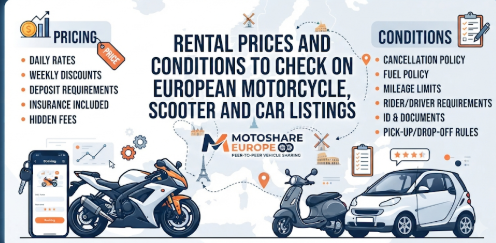
Searches for motorcycle rental cost Europe rarely lead to a single answer, and this article gives no fixed rate. Instead, think about the parts that shape a price:
- The vehicle. A different motorcycle, scooter or car can mean a different price.
- The length of the rental. Short and long rentals may be priced differently.
- The place. The pick-up location can matter.
- The season. Busy months may cost more than quiet ones.
- The provider. Each provider sets its own pricing.
- Insurance and other terms. What is covered, and what is not, can change the total.
- Collection and return. Where and when you hand back the vehicle may count.
Only the listing itself can show the actual figure. Read it closely.
The Conditions Behind the Number
Conditions are the rules attached to a rental. They can be as important as the price. Look for notes on:
- The rental period and how it is counted
- Where and when to collect the vehicle
- Where and when to return it
- Any insurance-related information shown
- Rules the provider asks you to follow
- What the price includes and what it leaves out
If a listing does not say, ask the provider before you plan around it. Licence and cross-border rules are not covered here, so check them with official sources and the provider.
Where MotoShare Europe Fits
MotoShare Europe is a marketplace, not a rental company with its own fleet. It connects renters with owners and providers. It does not own every vehicle on the site, and not every listing comes from a private person.
A visitor searches by place and travel dates, reads the listings and sends a booking request. Collection is arranged with the provider. For businesses, the website advertises free vehicle rental management software. These tools are advertised, and their full working has not been independently verified.
Advertised Features and Verified Facts
It helps to keep two ideas apart. An advertised feature is something a website says it offers. A verified fact is something confirmed by checking. For the software, the advertised areas are vehicle listings, reservations, customer records, fleet availability, payment-related management, revenue information and reports. None of these has been independently confirmed here.
The same care applies to coverage. The platform presents itself as Europe-focused, but its visible inventory is smaller. Do not assume vehicles are available in every country or city. Read the live listings.
Peer-to-Peer Listings and Their Terms
In a peer to peer motorcycle rental Europe setup, an owner or provider describes the motorcycle and sets the terms. That means conditions can differ from one listing to another. The renter reads them, picks dates and sends a request. The provider then replies.
Not every listing is from a private person. Some come from rental businesses and other partners. Check who the provider is, because it can affect how you communicate and what to expect.
Vehicle Types and Typical Questions
Motorcycles, scooters, bikes and cars each raise their own questions.
A rider who searches for motorcycle rental Europe options should read the rental period, collection point and provider details. A scooter renter should check where to collect and how long to keep it. A bike renter should look at the vehicle details and availability. A car renter should check the dates, pick-up place and terms. No models, prices or countries are named here, since only live listings can confirm them.
Writing Clear Conditions as an Owner
Owners set the terms that renters read. A person who types “rent out my motorcycle” or “list my car for rent” into a search bar should plan the listing with care:
- Write accurate vehicle details.
- Add clear, recent photographs.
- State the rental period and conditions in plain words.
- Explain collection and return.
- Keep dates up to date.
- Reply to enquiries promptly.
Payouts, insurance arrangements and approval rules are not confirmed here, so ask the platform. Bookings and income are never guaranteed.
Owner steps in short:
- Choose the vehicle to list.
- Prepare details and photographs.
- Submit the listing through the platform’s process.
- Review enquiries and booking requests.
- Keep dates and details updated.
Keeping Conditions Consistent as a Business
A shop with many vehicles needs its terms to match its records. If a listing says one thing and the paperwork says another, renters and staff get confused.
The advertised tools could help a business keep listings, reservations and customer records together. Small car operators often look for free car rental software to save on costs. Bike rental software could help a shop track availability, and scooter rental software could help with bookings and customer records. A vehicle rental booking system holds dates, reservations and customer details. Pricing terms, account limits, exact functions and automation are not confirmed here, so test any tool first.
Business steps in short:
- Prepare vehicle and business information.
- Add or organize listings.
- Record reservations and customer details.
- Review availability and activity.
- Keep fleet records updated.
Renter Steps
- Pick the vehicle category.
- Search by place and travel dates.
- Read the participating listings.
- Check the details, price and conditions.
- Follow the booking request and collection steps.
Steps may differ by vehicle and provider.
Questions to Ask Before You Book
| Question | Who can answer it |
|---|---|
| What does the price include? | The listing, or the provider |
| Where do I collect and return? | The listing, or the provider |
| What are the rental conditions? | The listing, or the provider |
| Are my exact dates open? | The listing, or the provider |
| What do I need to bring? | Official sources and the provider |
Common Slip-Ups
Renters often skip vehicle details, forget about collection, assume every area has vehicles, ignore conditions or insurance notes, or compare prices without checking what is included. The cure is to read every listing in full.
Owners often write vague terms, post unclear photos, leave dates out of date or ignore enquiries. The cure is clear terms and fast replies.
Businesses often keep partial customer records, let availability go stale, skip reservation reviews, use old fleet lists or assume a software feature exists without testing it. The cure is a daily check and a short trial.
A Hypothetical Example
Sofia has a car she rarely drives. She writes a listing with accurate details, clear photos, rental periods and rules. After a few days, she notices that several people ask where the car can be collected. She realizes her listing left that out. She updates it with the pick-up place and the return plan, and she keeps her dates current.
Jonas needs a car for a short business trip. He enters his place and dates and reads the listings. Sofia’s listing now answers his main questions. He checks the price, the conditions and the pick-up place. Then he sends a booking request and waits for her reply.
Nothing was guaranteed for either of them. But clear terms saved time on both sides.
Why Marketplaces Help Here
A marketplace puts many listings side by side. That makes it easier to see how prices and conditions differ. It also lets local providers and independent owners show their terms to people already searching.
It cannot promise that a vehicle will be free or that a town will have listings. Prices, availability and rules belong to each listing and each provider.
Frequently Asked Questions
Why do similar prices lead to different rentals?
Because conditions, inclusions and collection plans can differ. Read the full listing.
Is there a standard motorcycle price in Europe?
No. Prices vary by bike, rental length, place, season, provider and conditions.
Where do I find the rules for a rental?
They are shown on the listing or given by the provider. Ask if anything is unclear.
Does MotoShare Europe own the vehicles?
No. It connects renters with owners and providers.
Is every listing from a private owner?
No. Some come from rental businesses and other providers.
Are vehicles available across all of Europe?
Not confirmed. The visible inventory is smaller than the platform’s Europe-wide positioning.
Is the free software proven to work as advertised?
Not independently. The tools are advertised, so test them first.
Can I list my own motorcycle or car?
The marketplace is built around owner listings. Approval and bookings are not guaranteed.
Does this article cover licence or border rules?
No. Check those with official sources and the provider.
What should I do if a listing is unclear?
Ask the provider before you send a request or plan around it.
Conclusion
Price is only one piece of a rental. Conditions, inclusions and collection plans decide how a rental actually feels. MotoShare Europe gives renters a place to compare motorcycles, bikes, scooters and cars. It gives owners a way to list vehicles and advertises tools for small rental businesses. Renters should read each listing closely. Owners and shops should keep their terms clear and their records current.
Prices, availability and features all depend on current listings and the providers behind them.
Leave a Reply